


To satisfy my Applied Writing requirements I have chosen two pieces from Creative Writing Classes. What is interesting to note is that these classes took place in completely different countries and completely different times in my life.
Work

Applied Writing

The first, Introduction to Creative Writing: Poetry, encompassed elements of both literary analysis and creative writing. It quite literally was my introduction to the University of Denver since I took it during my first quarter. I was as new to the school as I was to poetry. I vividly remember feeling thoroughly flattered because a girl in my class thought I was a junior.
We were required to think about poetry deductively, beginning with the small details and using those as fuel to generate larger ideas about why poetry does or does not matter. The group discussion format of the class helped cultivate curiosity while the in-class exercises encouraged us to express ourselves.


The second, Creative Writing, I took abroad in Florence, Italy. This class was an intimate seminar where we analyzed different creative writing styles, wrote our own stories mimicking these styles and workshopped them with the class. Taking this class in Florence expanded my writing capabilities because we were able to go to the sites and fully observe the power of writing. For example, we visited the places mentioned in Dante’s Inferno and were fully immersed in the text’s description of these locations, effectively being transported back in time. That experience shaped my ability to write specific descriptions of places which further enhance the reader’s experience.

History, Theory, Research
.jpeg)
In Fundamentals of Argumentation, we learned how to conduct a critical analysis of how argumentation is conceptualized within the communication discipline. This class has an emphasis on current events and issues which we used argumentation theories to better understand. Specifically, we evaluated the disciplinary constructs of rationality, reasonableness, and societal argumentation. Case studies were an integral tool we used to examine cogent arguments, assess opposing arguments, and communicate our judgements effectively. In sum, the goal of the class was to develop effective well-rounded argumentation skills.

In Theories of Writing, we were introduced to a number of theories which helped provide an overview of complex issues and research into the state and status of writing and writers. The goals of the class were; to accurately characterize theories of writing, to analyze the origins, contexts, assumptions, and implications of writing, explain connections (and disconnections) between various theories, and to apply theories to current issues about writing, both scholarly and popular. The piece I have selected is a short story which follows a college couple's tense reaction while the girlfriend is working the night shift at Chamberlain Observatory located around the corner from DU's campus.
Theories of Writing

Accounting Course Work


The focus of Intermediate Financial Accounting II is the application of Generally Accepted Accounting Principles to complex business transactions. We continued the examination of the balance sheet including inventory valuation methods, long term assets, depreciation and depletion concepts and methods, intangible assets and amortization, current and long-term liabilities, and other financial reporting issues. This class is considered the most difficult in the Accounting Core program and it was an extremely formative experience which shaped me into the kind of student I am today.
Intermediate Financial Accounting II - ACTG3038

Intermediate Financial Accounting III was a continuation of I, II and completes the examination of the foundation and content of published financial statements. Specific topics we covered include: stockholders' equity, investments in debt and equity securities, revenue recognition, income taxes, pensions, leases, statement of cash flows, accounting changes and errors, and interim reporting. By the end of this course I acquired a professional level of knowledge in financial accounting theory, understood the impact of specific topics covered in this course to a company’s overall financial condition, thought critically about accounting standards, their intended purpose, and the issues we may encounter as business transactions continue to evolve and researched complex accounting issues using the FASB codification and was able to interpret accounting standards.
Intermediate Financial Accounting III - ACTG3068
Revision Assignment

For the revision assignment, I chose to change my Audiocast from Theories of Writing into a Wall Street Journal-style Opinion Editorial. My Audiocast (think podcast) script was a tongue-in-cheek deep dive on the etymology of the word "cookies." Cookies, not the treat, are small text files that allow websites to remember your activity even after you have closed the tab. This technology greatly enhanced internet user's experience but also lead to the development of surveillance capitalism. My Opinion Editorial was a critique of surveillance capitalism, specifically how it seriously threatens free markets.
By Claire McDaniel
Commentary on the Dangers of Surveillance Capitalism


Additional Piece
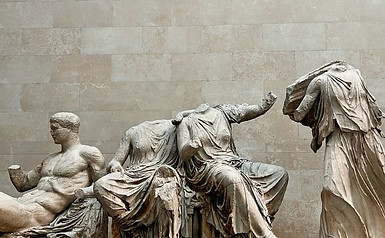
Also in Florence, Italy, I had the opportunity to take History of Greek and Roman Mythology. This class took us through Greek traditions, dynamics, and influences which later affected the development of Roman and Etruscan culture. Taking this class immersed in Italian culture was an extremely valuable experience because the rich history of the ancient cultures permeated into the classroom.

